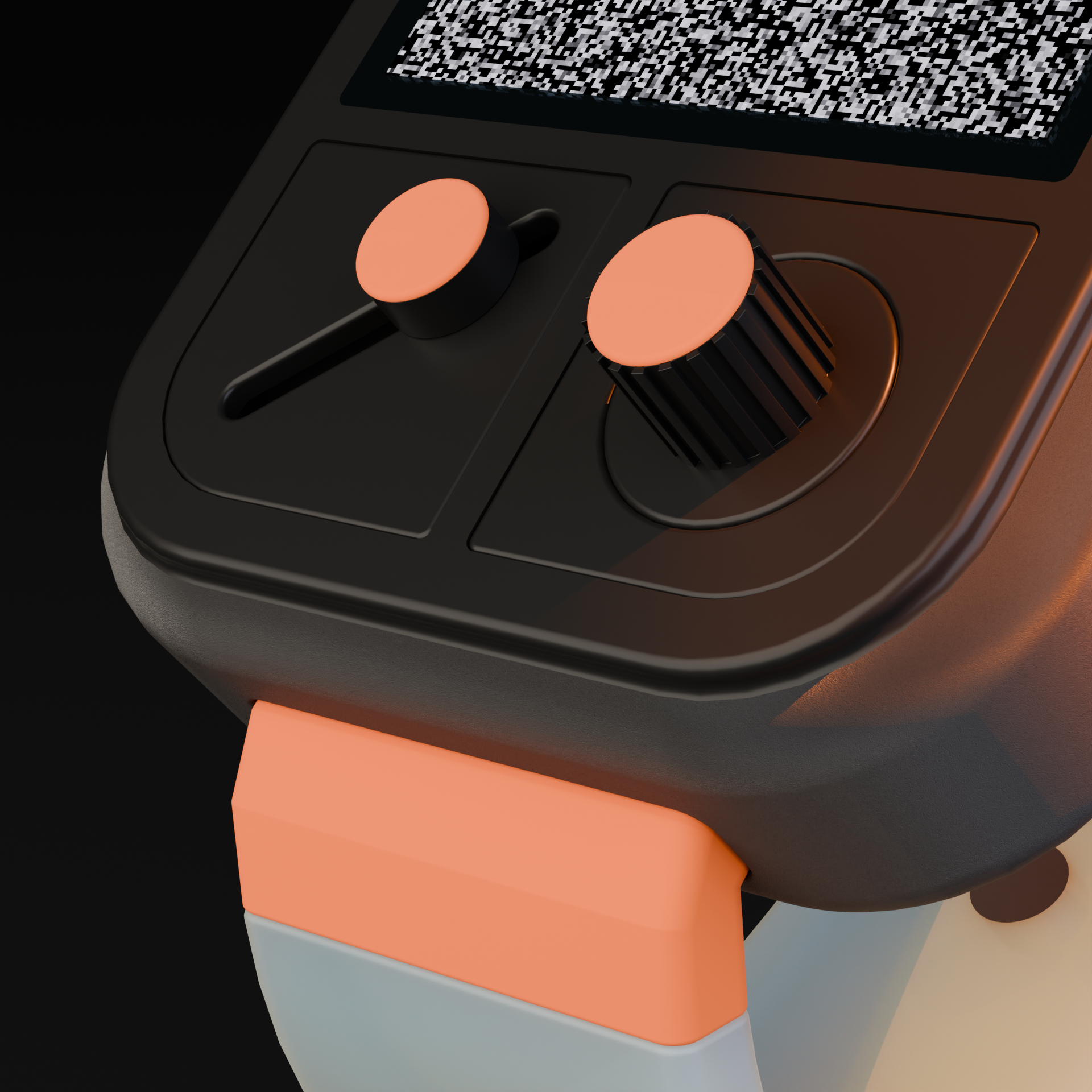
This project explores the use of neuromodulation to stimulate wrist nerves, enabling users to experience natural tactile feedback when interacting with virtual objects. By addressing the limitations of current VR/AR systems, the design reconfigures sensory perception by bridging digital signals with innate human touch.
Duration
2 Month
Methods
Speculative Design, Industrial Design, UI/UX Design
CONTEXT
Technology Behind Device
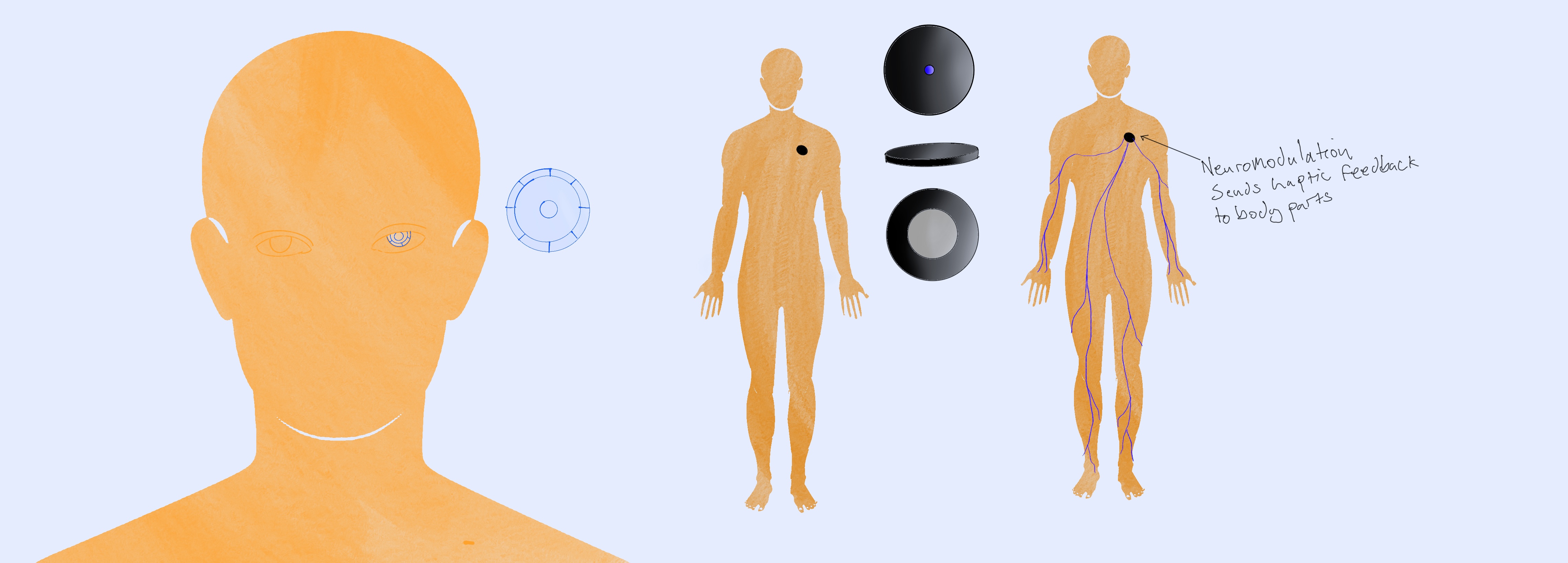
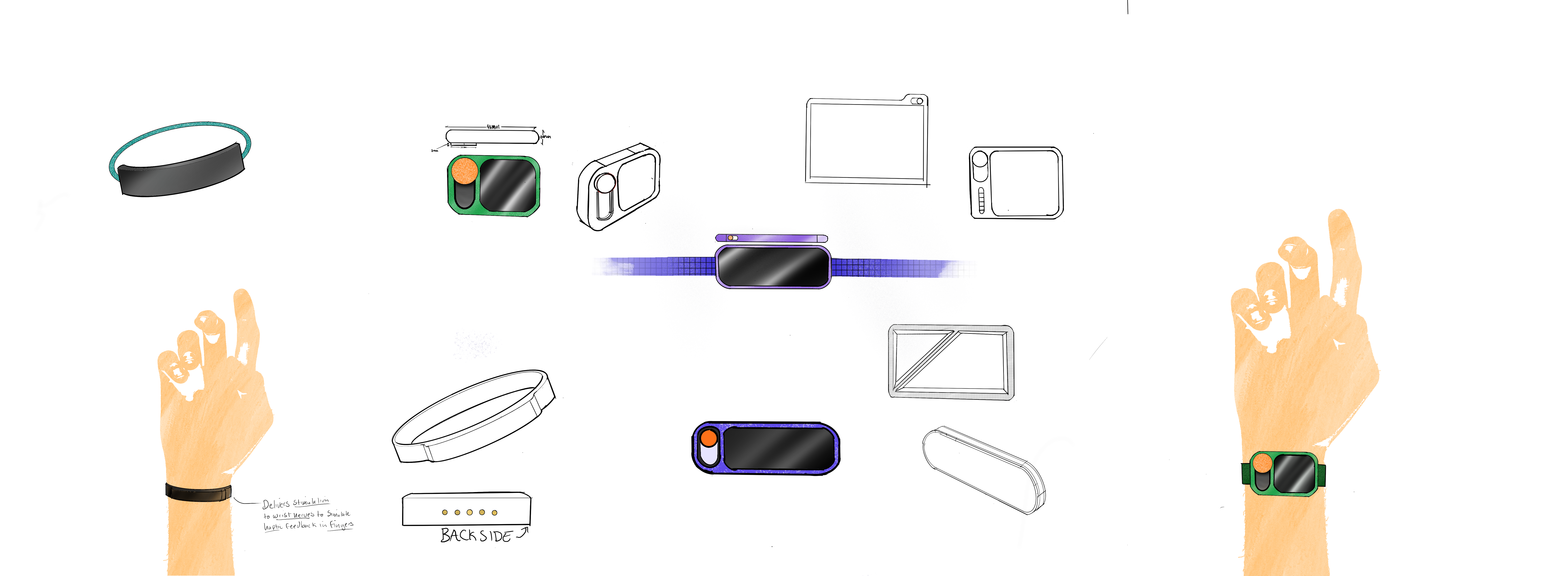
The device leverages neuromodulation through peripheral nerve stimulation (PNS) to create realistic touch sensations in virtual environments. By applying targeted electrical stimulation to the median and ulnar nerves in the wrist, it triggers sensory feedback in the fingers, mimicking the feel of real objects.
How It Improves on Existing VR/AR Haptics
Unlike traditional haptic gloves, this approach bypasses mechanical actuators, offering a lightweight, precise, and immersive alternative. The system integrates adaptive signal processing to fine-tune stimulation based on user interactions, ensuring seamless and natural touch experiences in AR/VR.
THEORETICAL FOUNDATIONS
This project draws inspiration from key readings on touch and human-computer integration, particularly Fingerbombing, or ‘Touching is Good’: The Cultural Construction of Technologized Touch by David Parisi and Man-Computer Symbiosis by J.C.R. Licklider.
Cultural Construction of Touch
Based on David Parisi's Fingerbombing, or ‘Touching is Good’: The Cultural Construction of Technologized Touch
The history of touch in media suggests that haptic habits are learned, not innate. The transition from button-mashing arcades to the gentle swipes of the smartphone era demonstrates our adaptability.
"New interface technologies reshape perception and bodily habits, creating new forms of 'haptic subjectivity'."
Parisi (2008) argues that new interface technologies reshape perception and bodily habits, creating new forms of "haptic subjectivity." This implies that users can be trained to accept and interpret novel sensations—like direct nerve stimulation—if framed correctly.
Relevance to Project
The shift from traditional haptic feedback to neurostimulation redefines how we perceive and feel touch in VR/AR, moving away from mechanical feedback towards a more natural, immersive experience.
- Touch isn’t fixed, it’s continually reshaped by technological shifts.
- HapticSense doesn’t just simulate touch; it redefines what “touch” means in digital environments.
- By bypassing physical surface interactions and stimulating nerves directly, it proposes a new perceptual paradigm rooted in neuromodulation.
Man-Computer Symbiosis
Based on J.C.R. Licklider's Man-Computer Symbiosis
"Licklider envisioned a future where computers seamlessly integrate with human cognition..."
Licklider (1960) envisioned a future where computers seamlessly integrate with human cognition, acting as extensions of the self rather than mere tools. HapticSense embodies this by bypassing traditional I/O (screens, keyboards) and interfacing directly with the nervous system, reducing the cognitive load of translation.
Relevance to Project
This vision is embodied in the use of neuromodulation to simulate realistic touch, enabling users to experience virtual objects just like physical ones. It pushes the boundaries of human-computer interaction and redefines sensory augmentation in virtual spaces.
- HapticSense envisions bi-directional interaction, where computers don’t just receive input, they speak back through sensation.
- This positions the body as both interface and medium, bridging Licklider’s dream with speculative design.
RESEARCH
I explored neuroprosthetic technologies to develop a wrist-worn device that stimulates nerves, enabling users to feel virtual objects. Inspired by research such as the xTouch platform, this project examines sensory feedback, neuroprosthetics, and VR integration. Below are key insights that shaped my design.
1. xTouch: Neuro-Haptic Feedback
The xTouch study demonstrated a non-invasive neuro-haptic platform that uses surface electrodes on the wrist to stimulate the median nerve. Unlike invasive methods, xTouch successfully allowed users to classify virtual objects by size and compliance (softness) purely through haptic feedback. This proves that meaningful tactile information can be transmitted through the wrist without surgical implants.
xTouch: High-Fidelity Haptics
Research by Yang et al. (2021) on "xTouch" demonstrates the feasibility of high-fidelity neuro-haptics. Their work shows that specific electrical waveforms can reliably evoke distinct tactile sensations (pressure, vibration, texture) without invasive surgery.
"Users can distinguish between 'hard' vs 'soft' and 'large' vs 'small' objects via nerve signals."
Key finding: Users can distinguish between "hard" vs "soft" and "large" vs "small" objects via nerve signals.
- Non-Invasive Feasibility: Surface electrodes can effectively stimulate nerves to create distinct sensations.
- Object Properties: Users can distinguish between "hard" vs "soft" and "large" vs "small" objects via nerve signals.
- Wrist-Based Form Factor: Validates the concept of a wearable wrist device for VR haptics.
2. Tactile Feedback in Virtual Reality
Research into VR systems has shown that combining visual immersion with tactile feedback significantly enhances the perception of realism (Hoffman et al., 1998).
Examples
- Physics-based interaction models in VR simulate forces, friction, and textures during object manipulation.
- When paired with sensory feedback devices, these models can trick the brain into perceiving virtual objects as tangible.
This insight suggests that a wrist-worn device could synchronize nerve stimulation with VR visuals and physics-based simulations to create a seamless experience of interacting with virtual objects.
3. Feasibility of Wrist-Based Nerve Stimulation
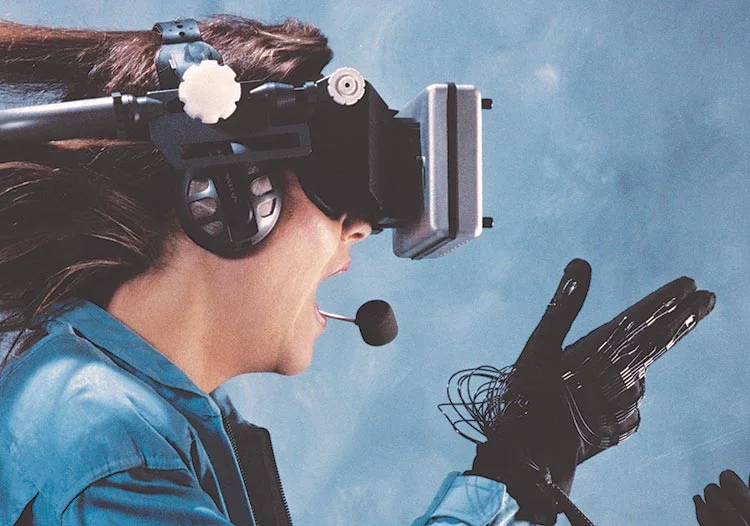
While LifeHand relies on surgically implanted electrodes, non-invasive alternatives like transcutaneous electrical nerve stimulation (TENS) provide a practical path for wearable devices.
- Speculative Practicality: Surface electrodes allow for peripheral nerve stimulation without surgery, making them ideal for consumer-focused designs.
- xTouch Innovation: Systems like xTouch use multi-channel transcutaneous stimulation of the median nerve at the wrist to create precise sensations.
- Immersion without Restriction: By tracking virtual interactions, these methods deliver intuitive feedback without restrictive hardware, enhancing realism.
Challenges to Address
- Mapping wrist nerves accurately to replicate sensations across all fingers.
- Ensuring low latency for real-time feedback during interactions.
- Balancing portability and power efficiency in a compact wrist device.
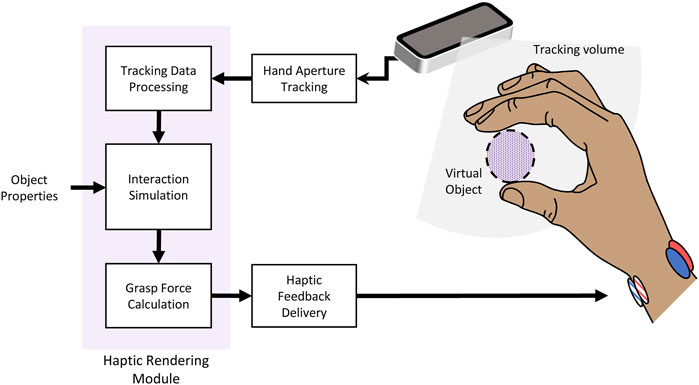
Source: Frontiers in Virtual Reality
4. Sensor Technology and Artificial Touch
Advances in sensor technology, such as those used in prosthetic hands, offer additional possibilities.
Inspiration
- Sensors capable of detecting pressure, texture, temperature, or wetness could be integrated into the device.
- These sensors would translate virtual object properties into electrical signals for nerve stimulation.
For example, if a user touches a rough virtual surface, the sensors could generate corresponding signals that stimulate the wrist nerves to mimic the sensation of roughness on their fingertips.
5. User Adaptation and Cognitive Integration
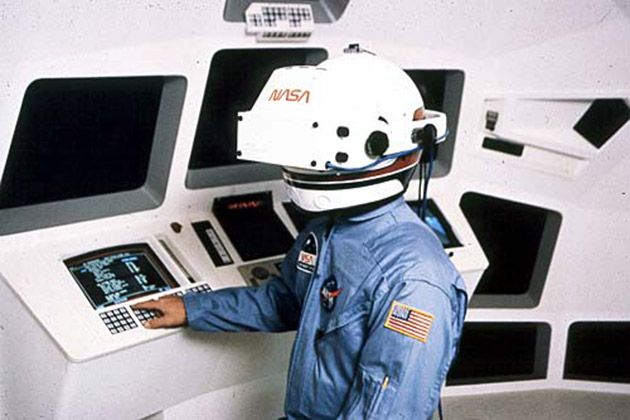
One critical consideration is how users would adapt to artificial sensations. Research indicates that with training, users can interpret artificial tactile feedback as natural touch. This adaptation process would be essential for ensuring that the device delivers an intuitive and immersive experience.
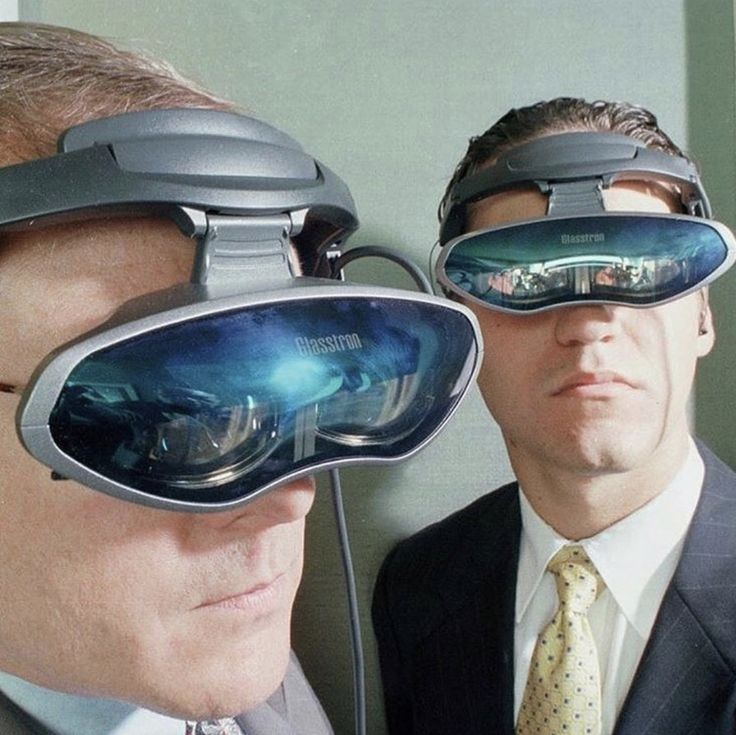
Conclusion
- The research phase showed that neuroprosthetic technologies, such as those used in LifeHand, offer inspiration for speculative wearable devices that simulate touch in virtual environments.
- Integrating peripheral nerve stimulation methods with AR, VR, or MR technologies and advanced sensors could redefine how we experience digital interactions.
- Emerging non-invasive technologies like xTouch demonstrate practical possibilities by using multi-channel transcutaneous nerve stimulation to provide intuitive haptic feedback without limiting hand mobility.
"Current VR/AR systems fall short in delivering natural, immersive tactile feedback due to the disconnect between digital stimuli and human sensory perception."
OBJECTIVES
Technical
- Develop a wearable device that stimulates targeted nerves (median and ulnar) in the wrist.
- Integrate adaptive signal processing for precise, low-latency stimulation.
User Experience
- Create a natural, immersive tactile experience that mimics real object interaction.
- Enhance spatial presence, embodiment, and cognitive absorption in VR/AR environments.
IDEATION
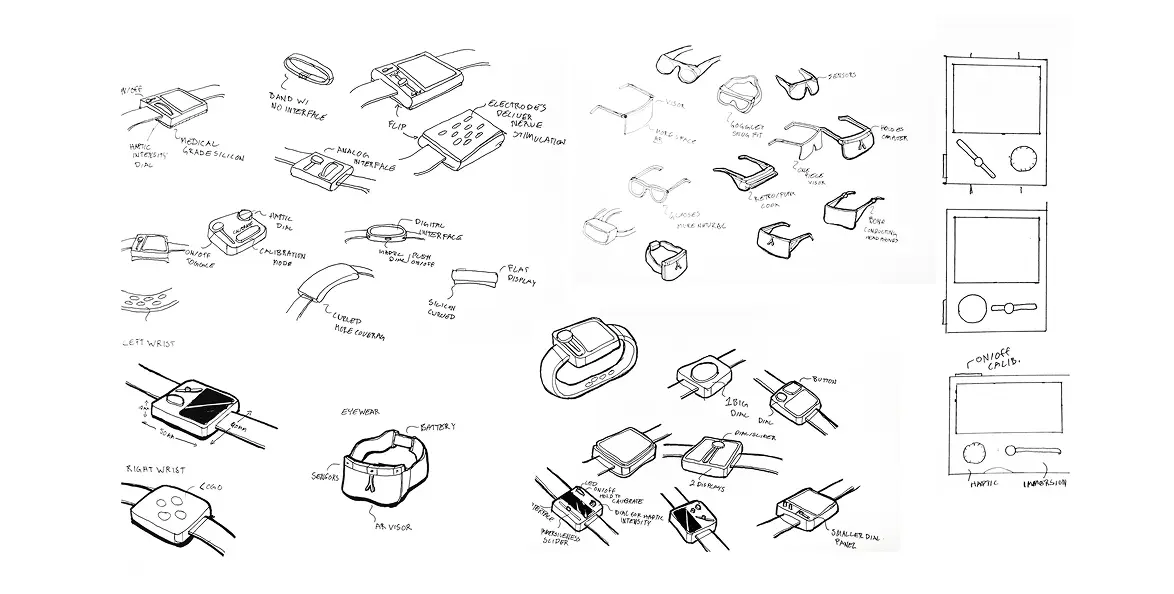
Sketches
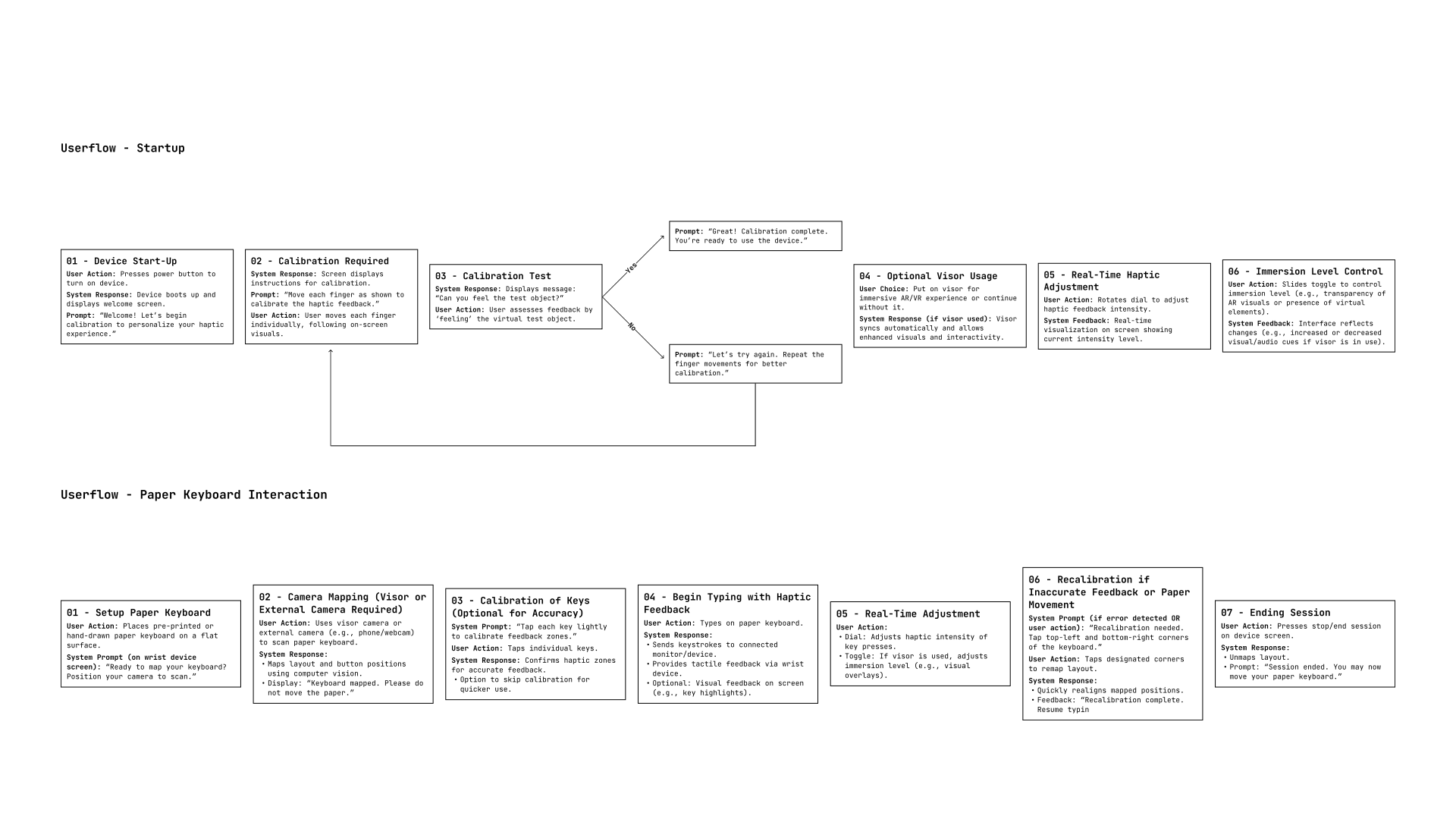
User Journey
CONCEPT REFINEMENT
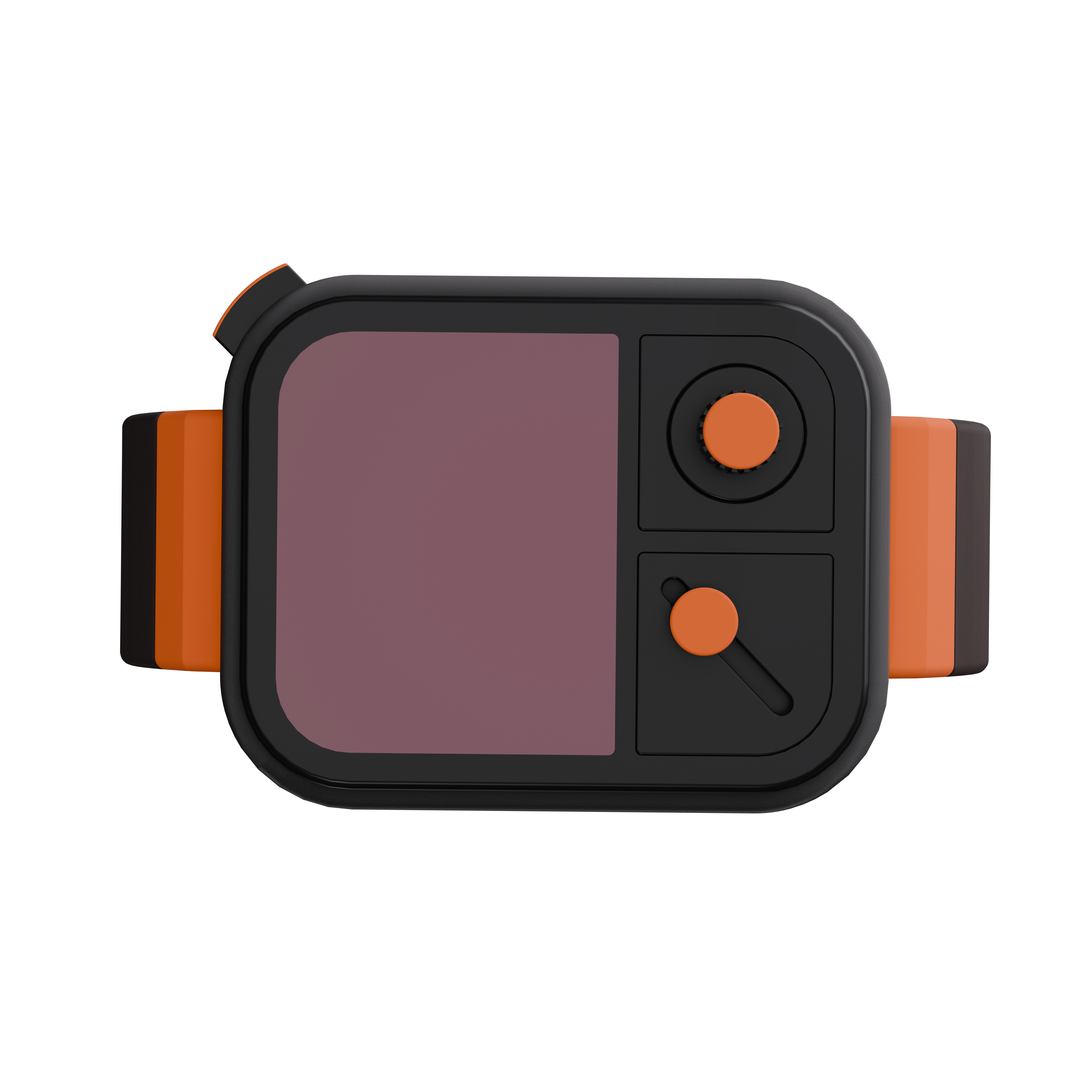
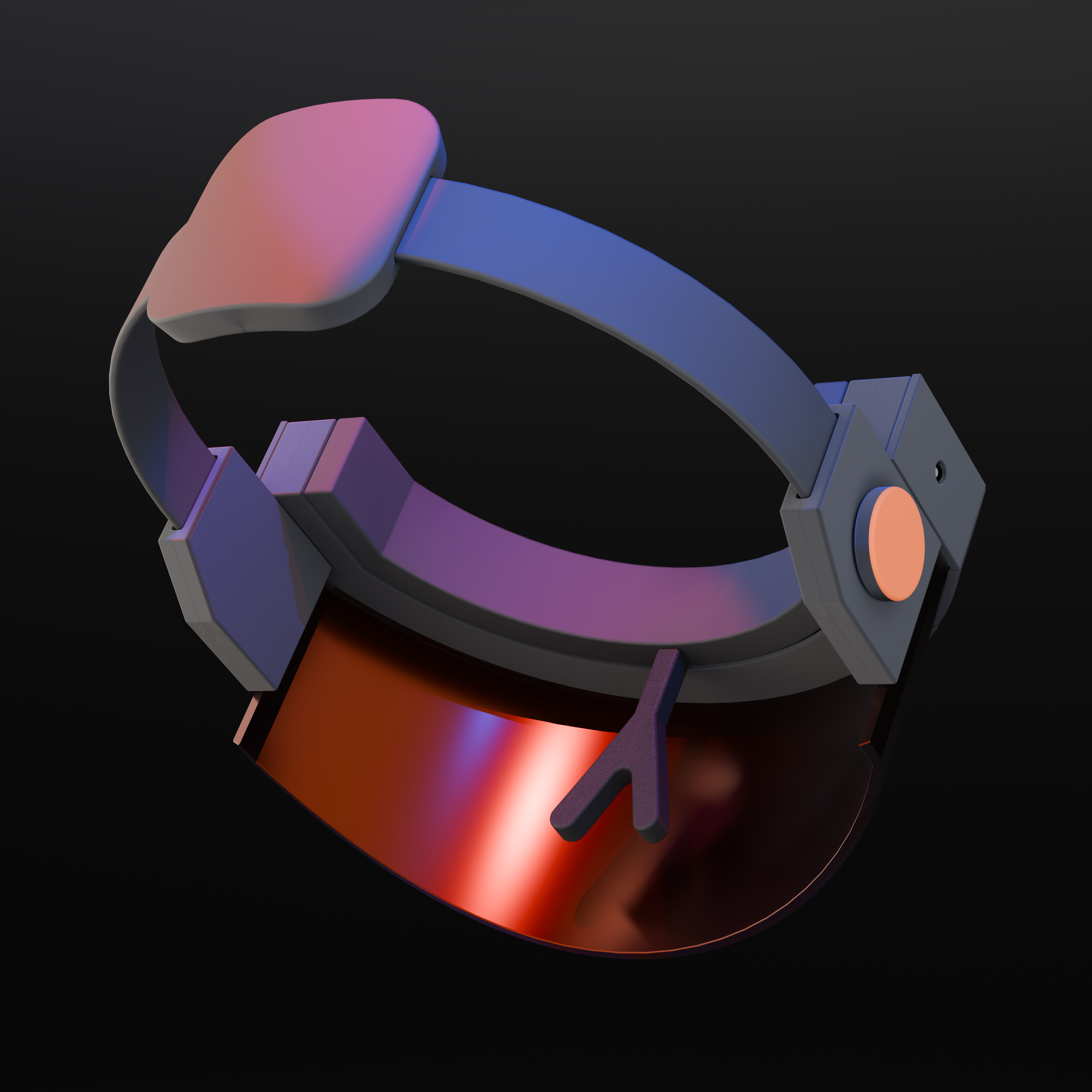
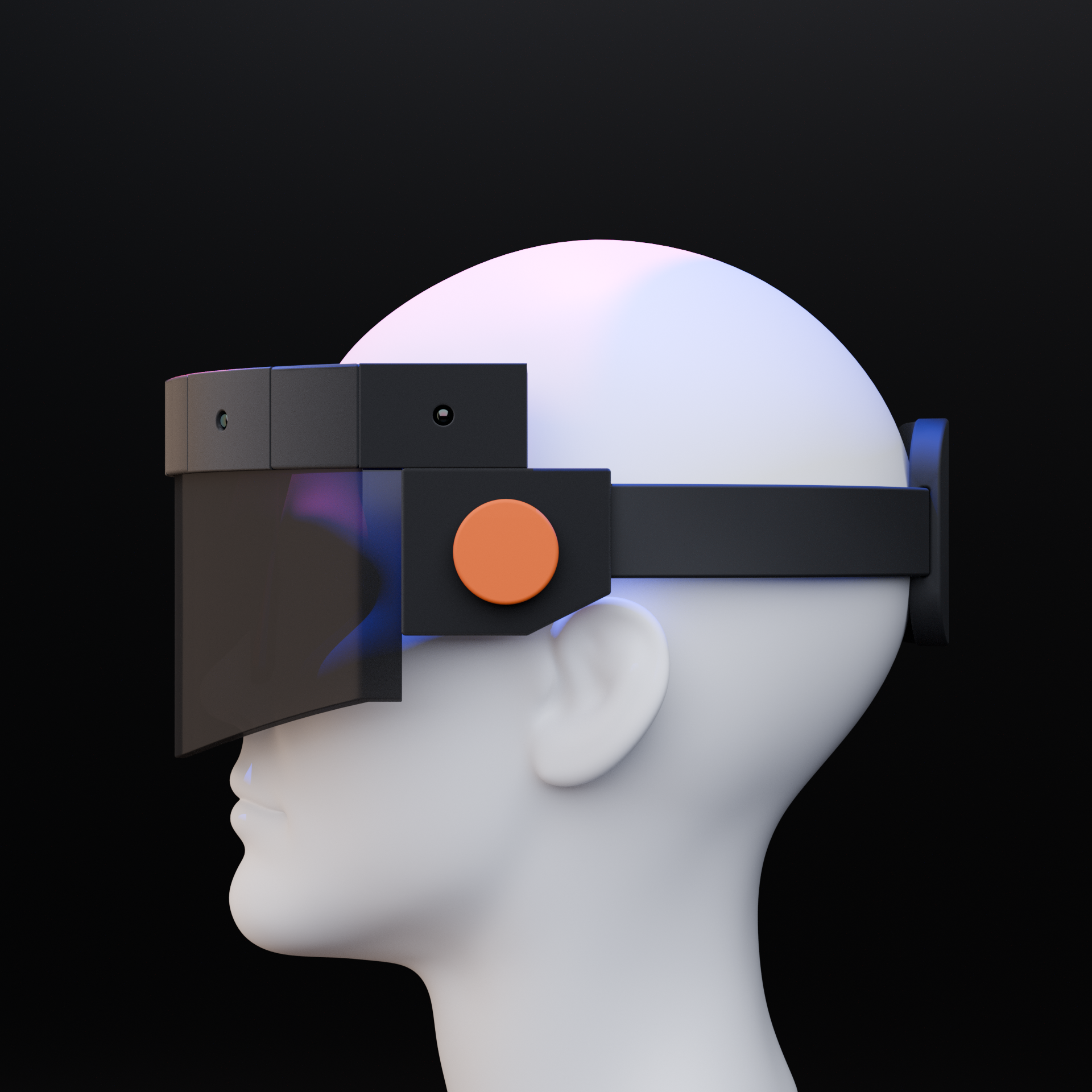
Hardware
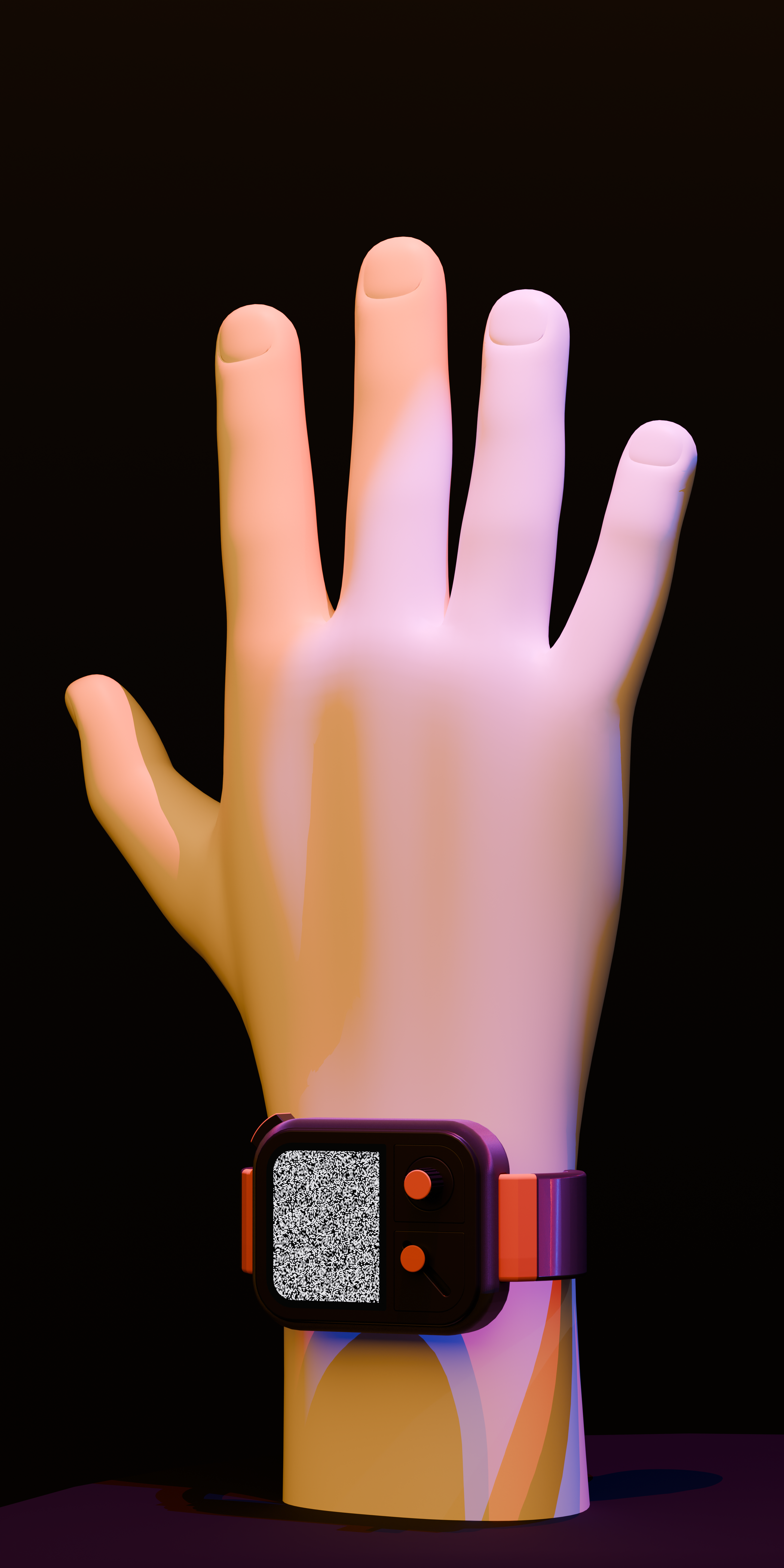
Digital Interface
Welcome
Let's begin calibration to personalize your haptic experience.
Calibration
Flex each finger individually as highlighted.
Test Haptics
Can you feel the pulse?
Recalibrating...
Please wait.
Calibration Done
Ready for next steps.
Visor Setup
Put on visor for immersive experience or continue without.
Haptic Intensity
Rotate dial to adjust feedback intensity.
Immersion Level
Slide toggle to control immersion.
Setup Complete
You are ready to go.
CHANGING BEHAVIOR
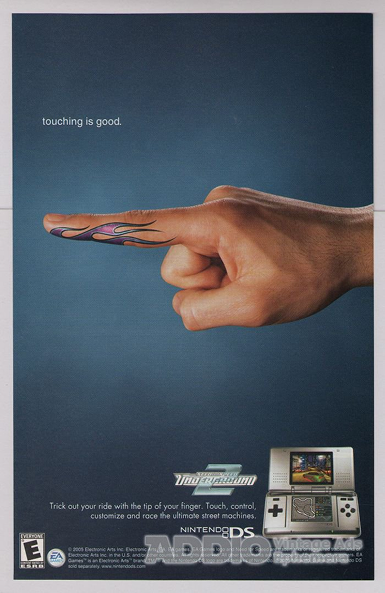
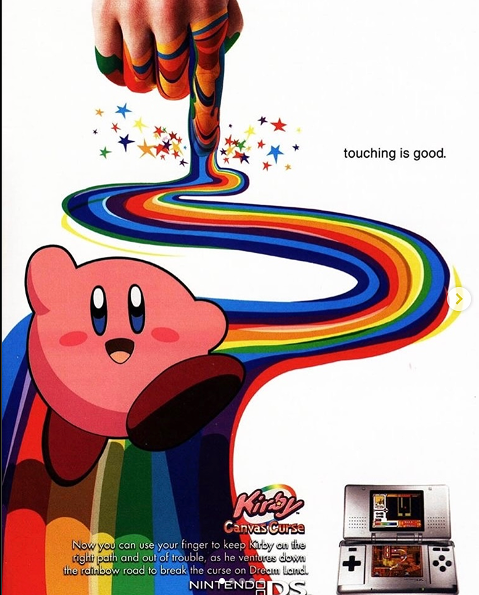
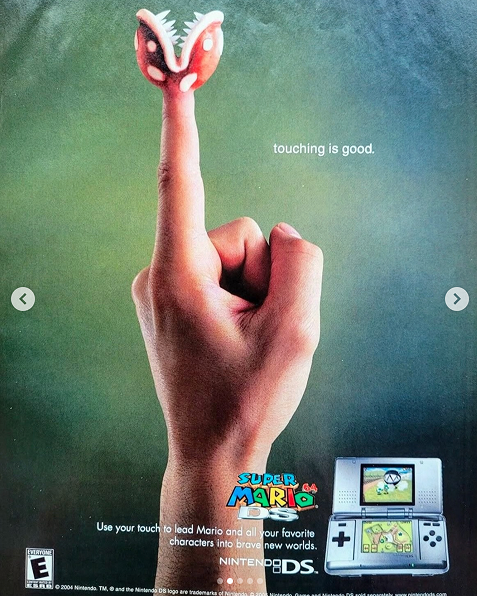
Nintendo as a Case Study
Nintendo marketed the DS by redefining user interaction through their bold "Touching is good" campaign.
- Intuitive Control: Promoted touch as a direct form of control, with visuals of fingers engaging the screen.
- Strategic Framing: Positioned touch as an "underappreciated" sense in modern media that the DS could reconnect users with.
- Gamic Touch: Established a new paradigm where physical interaction directly shaped gameplay, declaring "touching the game means controlling the game."
Source: David Parisi, "Fingerbombing, or 'Touching is Good': The Cultural Construction of Technologized Touch".

The Future of Touch
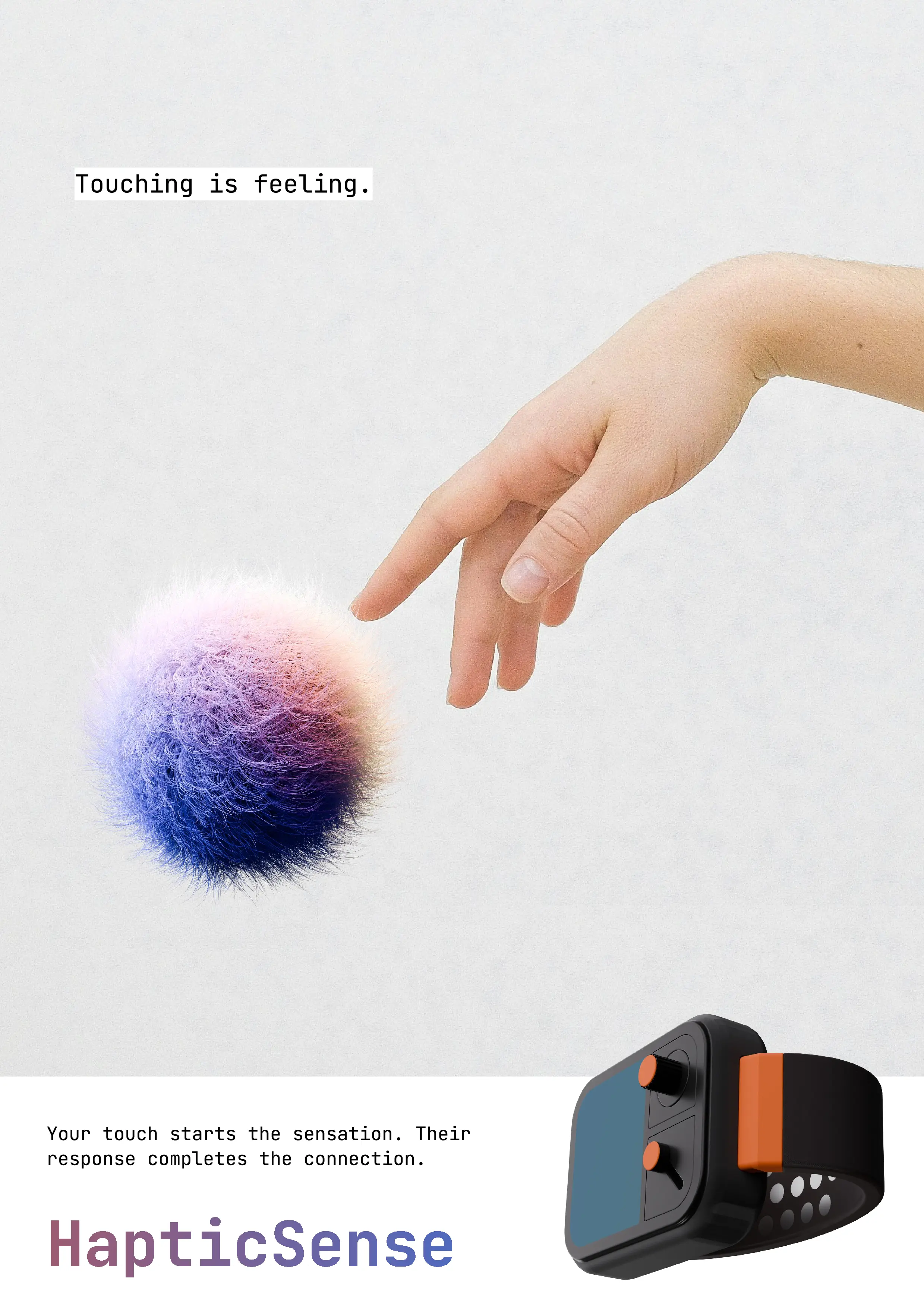
Building on Nintendo's precedent, this speculative campaign envisions neuromodulation-based virtual touch.
- Bi-Directional Exchange: Unlike traditional interfaces focused on control, this technology allows the interface to touch back.
- Symbiotic Relationship: Creates a seamless connection between the user and digital environments.
- "Touching is Feeling": The campaign slogan emphasizes the transition from passive interaction to genuine sensory experience in virtual spaces.
NEXT STEPS
Speculative Design
- Speculate on how this will effect humans perception on touch.
- What might the implications be?
Prototype
- Create physical prototypes of the device
- Mimick functionality