the future of data storage

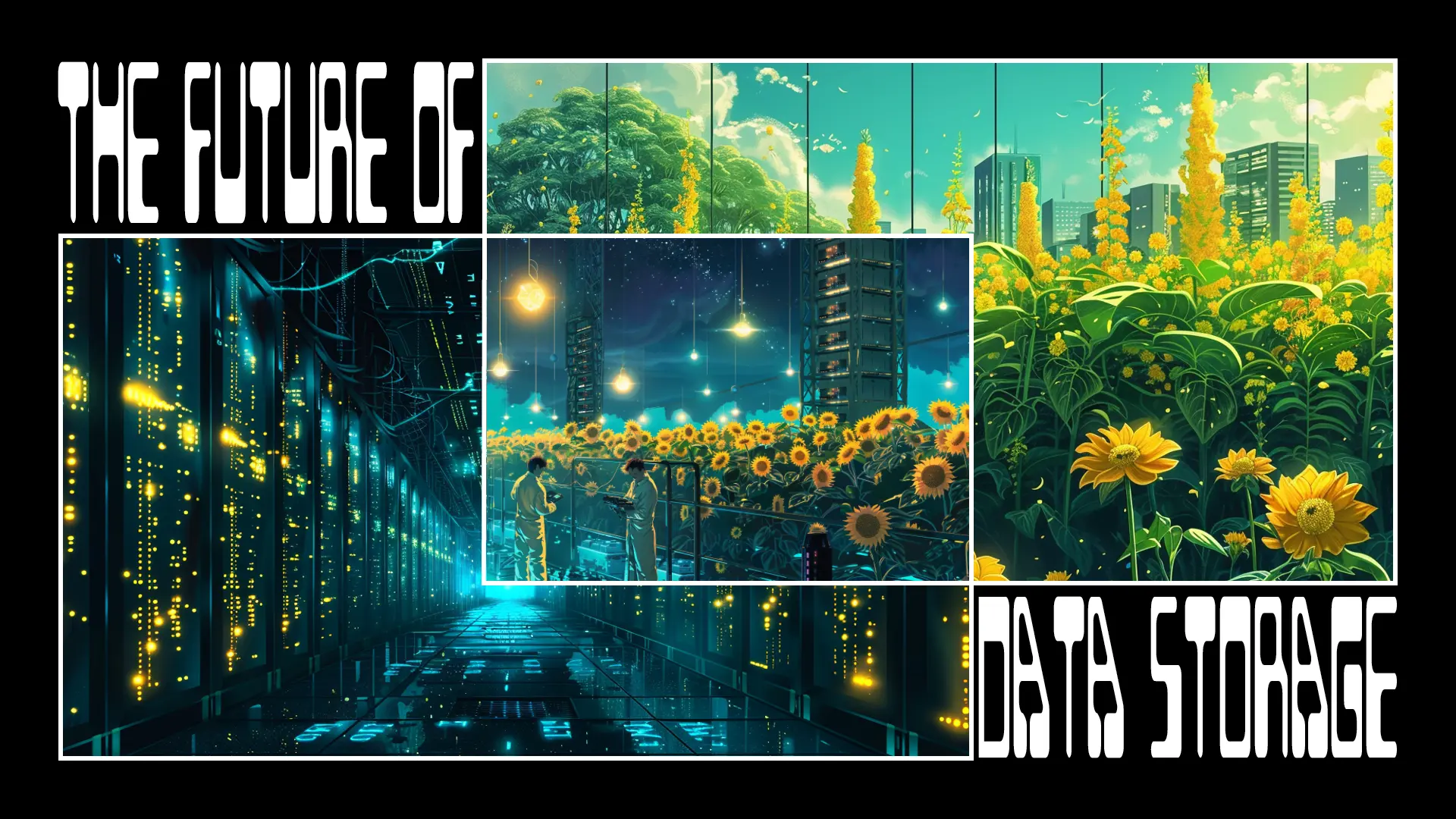
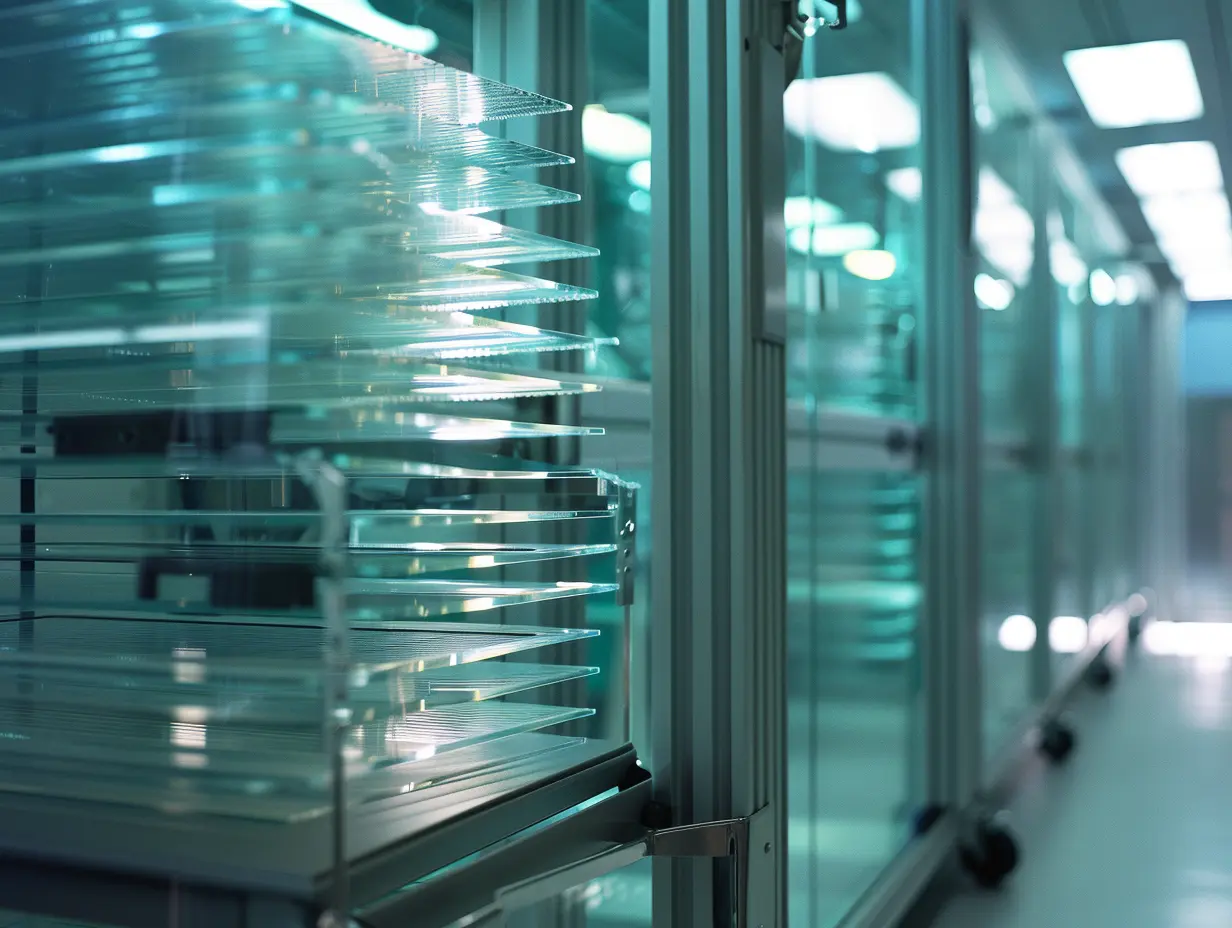
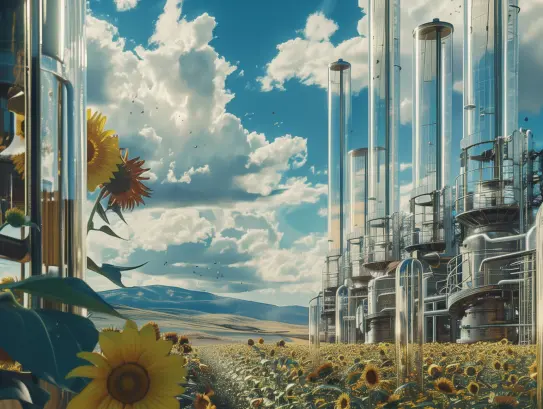
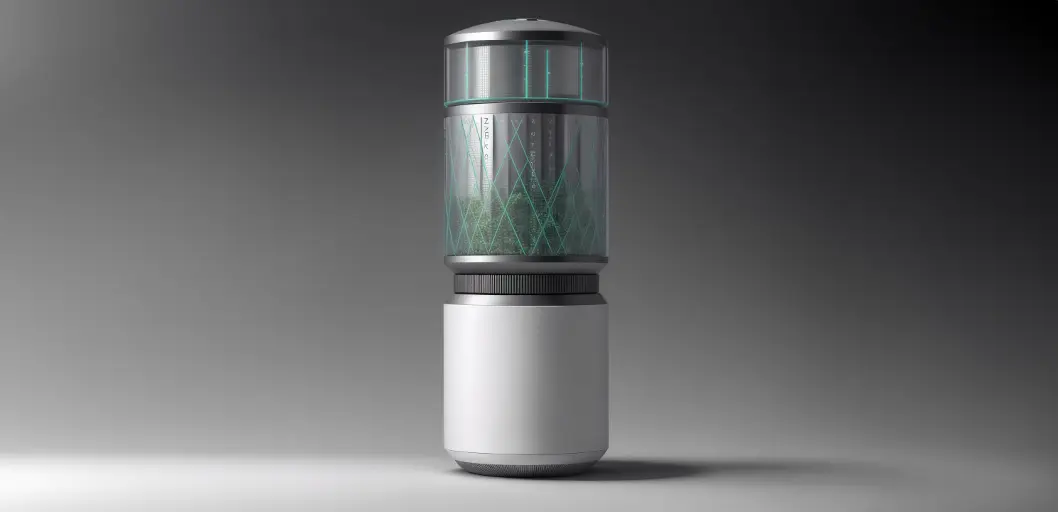
Speculative illustration of DNA data storage systems

This project explores the future of data storage, focusing on the potential of DNA as the primary medium. Through strategic foresight and speculative design, it charts the anticipated rise and diverse applications of DNA in data storage.

Duration

8 Months

Methods

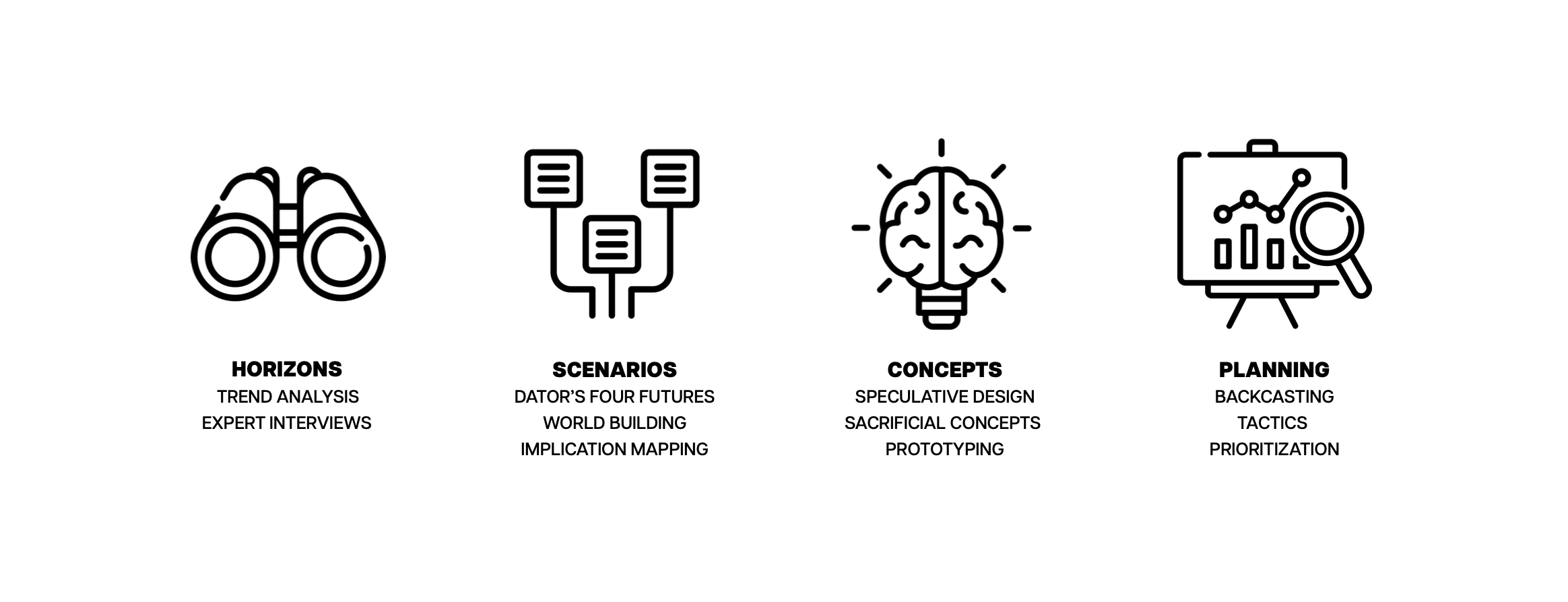
Speculative design, strategic foresight

What if our world’s data moved from data-centres to living DNA?

Today's Situation

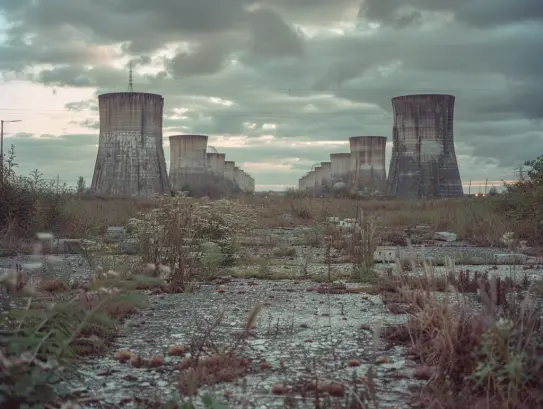
Exploding data, fragile media, and energy‑hungry data centers create a long‑term sustainability problem. Even as bit density improves, lifespans and materials dependency limit how much we can practically preserve.

So What?

We need durable, low-energy, high-density media that can scale across centuries, not upgrade cycles.

Projected demand vs shipped capacity

Millions of petabytes, 2019–2030. New forecast numbers reveal a widening gap that DNA media could absorb for long-term archives.

Values reconstructed from the IEEE Spectrum graphic (Gartner data) for the DNA case study. Units in millions of petabytes.

Opportunity

Why DNA?

  1. Density
  2. DNA’s molecular encoding stores massive data in tiny volumes.

    How much data fits into a gram?

    A single gram of synthetic DNA can hold as much data as entire fleets of conventional media. The areas show how many devices you would need to match that single gram.

    Equivalents derived from Potomac Institute’s The Future of DNA Data Storage (2021). Assumes 1 gram of DNA ~= capacity of 42B USB sticks.

  3. Longevity
  4. Properly stored DNA can remain readable for centuries.

    How long does storage last?

    Estimated lifespans for common storage media versus properly stored synthetic DNA. A symlog axis makes short and very long durations comparable in one view.

    Lifespan estimates synthesized from published research (Frontiers in Bioengineering & Biotechnology, 2022) and insights from an interview with Dr. Lee Organick. Values are illustrative.

  5. Energy
  6. Passive storage dramatically reduces energy for long-term archives.

    Why passive archives save energy

    Relative operational energy to keep 1 PB readable over time (normalized: HDD = 100). Passive media avoid continuous power and cooling requirements.

    Operational energy index (HDD = 100) for illustration only; excludes writes/migrations. Passive DNA scenarios adapted from Frontiers in Bioengineering & Biotechnology, 2022.

How Data is Stored in DNA

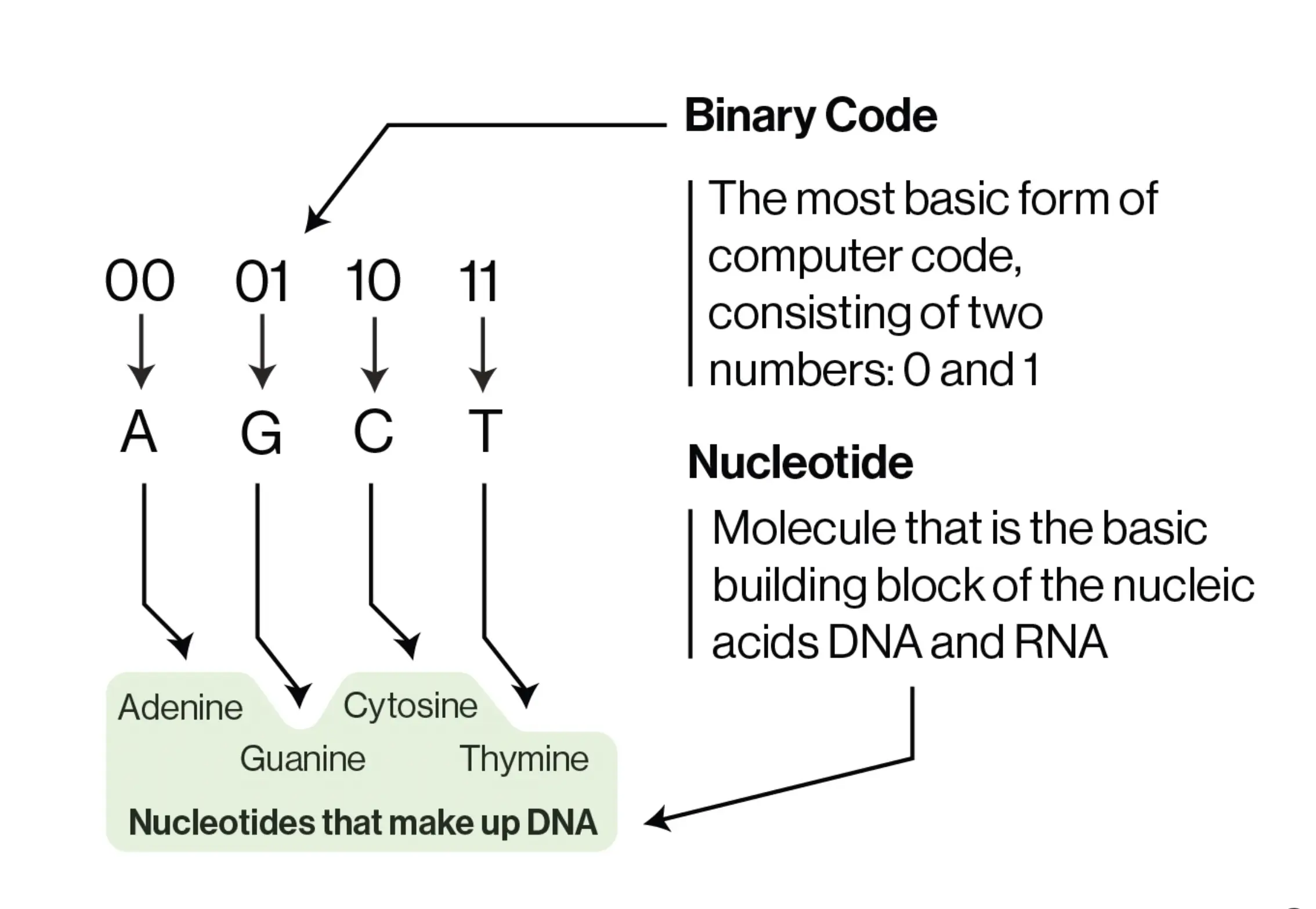
The workflow mirrors a reversible translation: binary data is algorithmically encoded into nucleotide sequences, strands are synthesized by DNA printers, vials of DNA are shelved as passive media, and future readers sequence the strands to decode the bits back into files. Each stage has dedicated tooling, but the payload never leaves the molecular format once written.

  1. Encode
  2. Bits are mapped to A/C/G/T sequences with error-aware codecs.

  3. Synthesize
  4. DNA foundries write the sequences into physical strands.

  5. Store
  6. Strands rest in cold, dry capsules that require no power.

  7. Sequence & Decode
  8. Readers recover the strands, sequence them, and reconstruct files.

Infographic showing the DNA data storage pipeline from encoding bits into nucleotides through synthesis, storage, and sequencing.

Conceptual pipeline illustrating how digital files become DNA and back again; adapted from speculative workshop sketches.

Process

Process diagram showing the stages of the project

What Do the Trends Say?

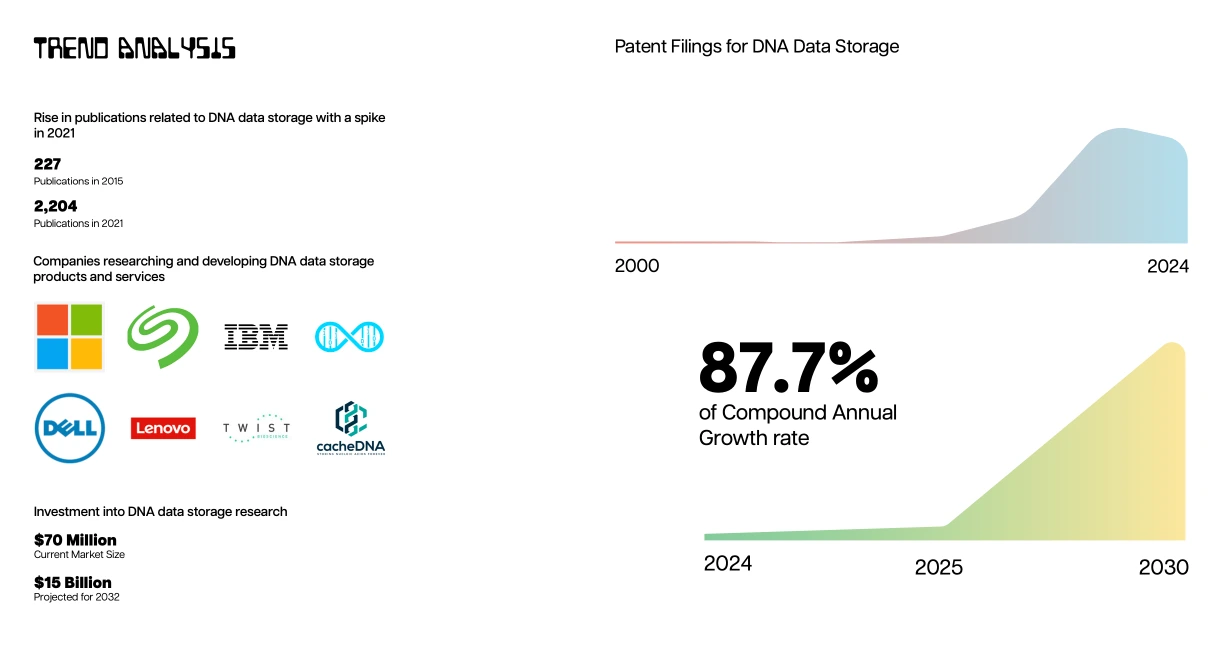
PubMed mentions of DNA data storage

Annual publication counts, 1984–2024. Exact-match query executed February 2024.

Source: PubMed.gov. Query (Title/Abstract scope unless noted): ("DNA data storage" OR "DNA-based data storage" OR ("DNA" AND ("data storage" OR "digital storage"))) NOT (biobank OR "sample storage" OR preservation).

Trend Analysis

Trend analysis diagram

Why is this happening?

As humanity increasingly relies on data-producing technology, data output grows exponentially. In turn, this necessitates more data centers, which generate unsustainable levels of carbon emissions.

Drivers of Data Growth

Conceptual model of data generation factors

Total Global Carbon Emissions

Source: Climatiq

Expert Interview

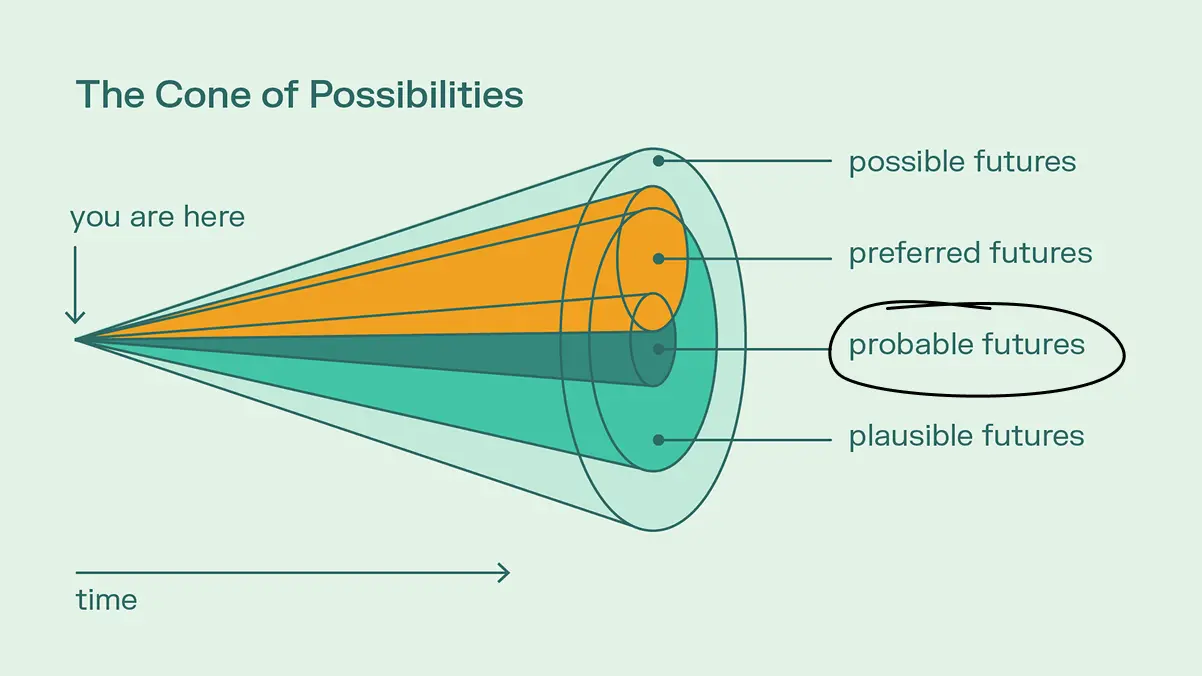
I facilitated a series of interviews with a DNA data storage researcher from CacheDNA. These interviews aimed to understand the direction of DNA data storage in the industry and how she believes it will most likely be used. This gave me a good sense of the probable future of the technology.

Key Insights

  • While current read & write speeds are slow, advancements are expected to significantly accelerate in the near future.
  • Although sequencing DNA is still costly, prices are steadily dropping, making it more accessible.
  • Innovative methods and materials used in DNA storage are far more sustainable than conventional data storage processes.
  • DNA-based data access is becoming increasingly intuitive, paving the way for wider adoption.
  • DNA offers the remarkable potential for near-permanent data storage, enduring for centuries or longer.
Cone of plausibility diagram

Scenarios

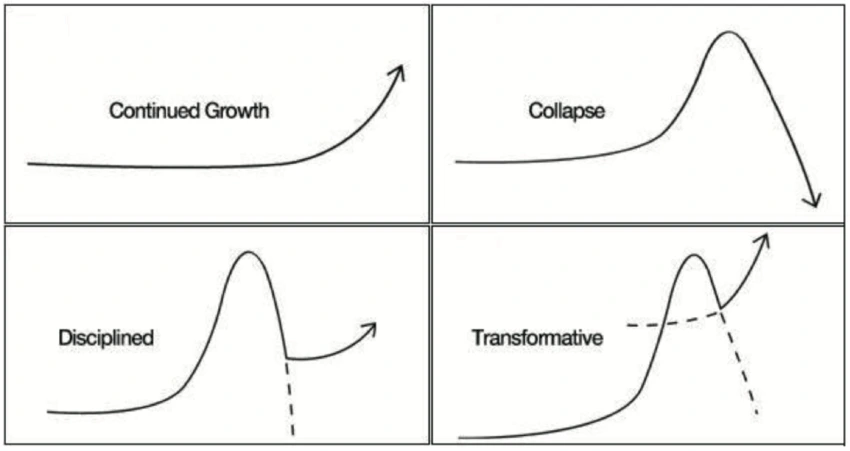
I mapped out four scenarios using Dator's Four Futures framework: Growth, Collapse, Discipline, and Transformative. These scenarios were developed by analyzing current trends and projections while also exploring the potential future of DNA data storage.

Dator's Four Futures framework diagram
Growth Scenario visualization

Growth Scenario

DNA data storage is maturing, leveraging biotech and information science to create secure, long-term archives. Advancements in synthesis and sequencing will make DNA a cost-effective mainstream storage solution.

Collapse Scenario visualization

Collapse Scenario

DNA storage struggles face economic and technical hurdles. Meanwhile, data explodes as data centers struggle with climate limitations. A data storage crisis looms, forcing quotas and hindering progress.

Discipline Scenario visualization

Discipline Scenario

DNA storage safeguards data and fuels progress. Ethical boundaries ensure responsible use for healthcare, research, and sustainability, prioritizing privacy over surveillance. This future demands societal self-discipline for responsible DNA data utilization.

Transformative Scenario visualization

Transformative Scenario

Gene editing unlocks super-fast, affordable DNA storage. Farms become data hubs, storing vast datasets alongside crops. DNA replaces traditional storage, fueling bio-computing, personalized medicine, and decentralized data controlled by individuals.

World Building

For this project, I used world-building to develop future scenarios that explore emerging trends and guide strategic decisions. I applied the Protopia framework to build on the transformative scenario from Dator’s Four Futures, emphasizing continuous and realistic progress over utopian ideals.

Transformative scenario illustration

The Year 2040

In this envisioned future, DNA data storage emerges as the primary medium, prized for its exceptional density, speed, and longevity. Traditional farmlands are transformed into high-tech data vaults, where genetically modified plants store vast amounts of information. This shift has spurred the rise of innovative tech hubs across the Midwest, reshaping education and job markets while fostering a dynamic interplay between technology and nature.

Implication Mapping

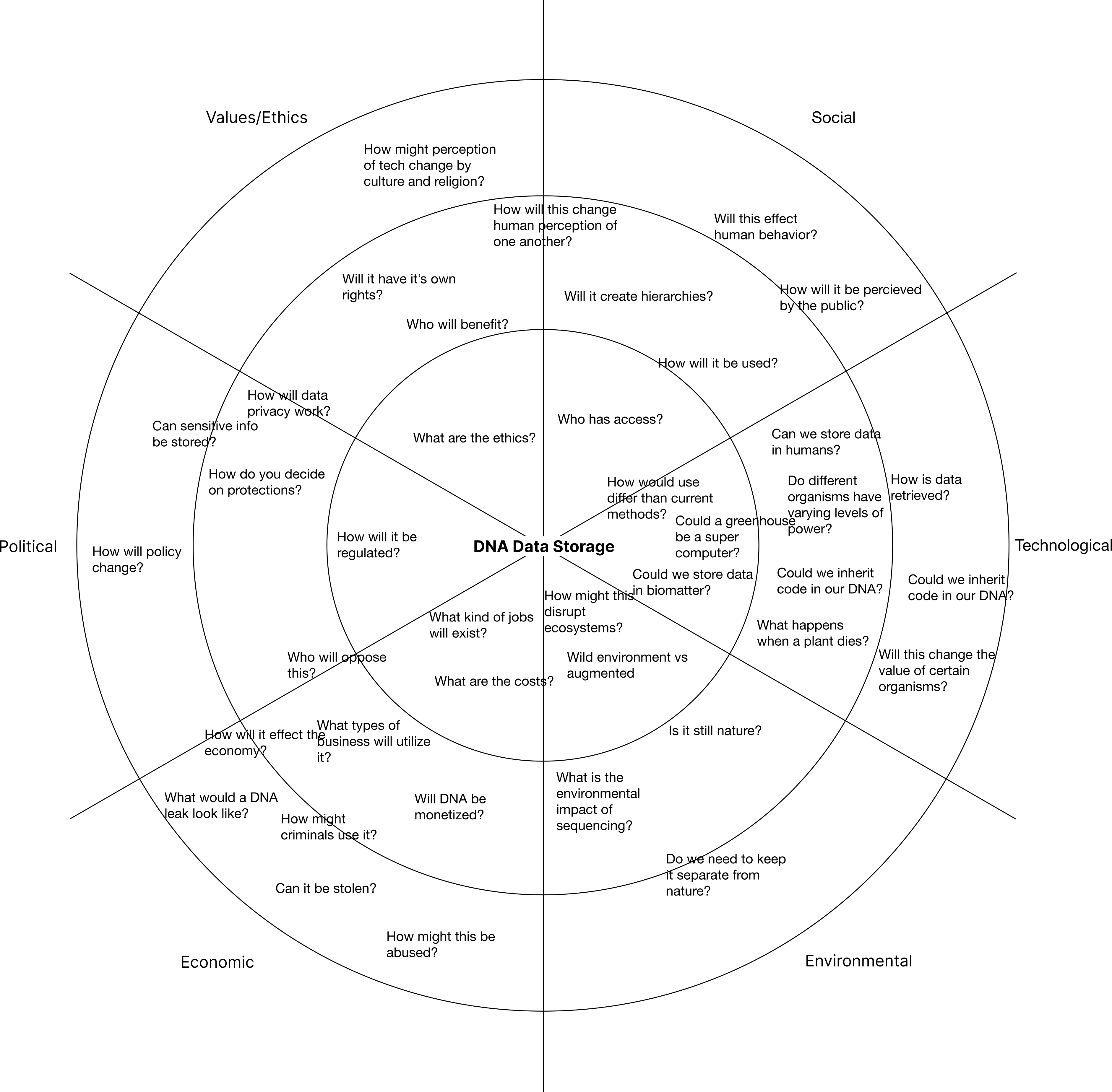
In this case study, implication mapping served as a strategic foresight tool to dissect and visualize the cascading impacts of emerging trends. By charting both direct and indirect effects across technology, society, the economy, the environment, the political, and values, we uncovered hidden opportunities and potential risks.

Implication mapping diagram

Sacrificial Artifacts

Sacrificial artifacts serve as intentionally imperfect prototypes that reveal critical trade-offs and hidden assumptions. By challenging conventional approaches and provoking dialogue around the balance between innovation and ethical responsibility, these artifacts illuminate the path toward more resilient, human-centric solutions.

DNA Data Storage Capsule artifact

DNA Data Storage Capsule

A capsule that stores humanity's collective knowledge.

DNA Data Storage Plant artifact

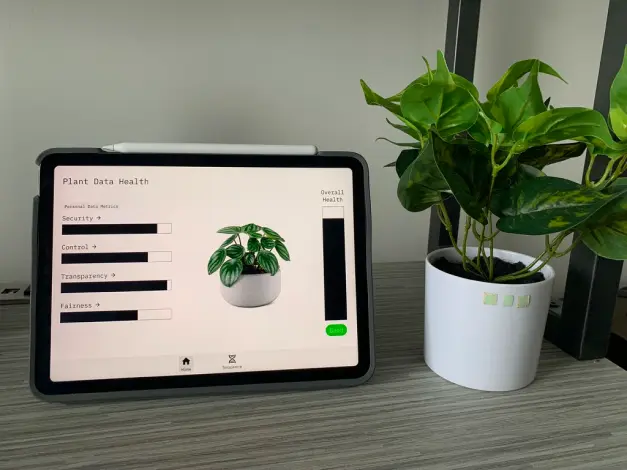
DNA Data Storage Plant

Plants that store personal data and react to its "health" by wilting or blooming.

Magazine from the Future artifact

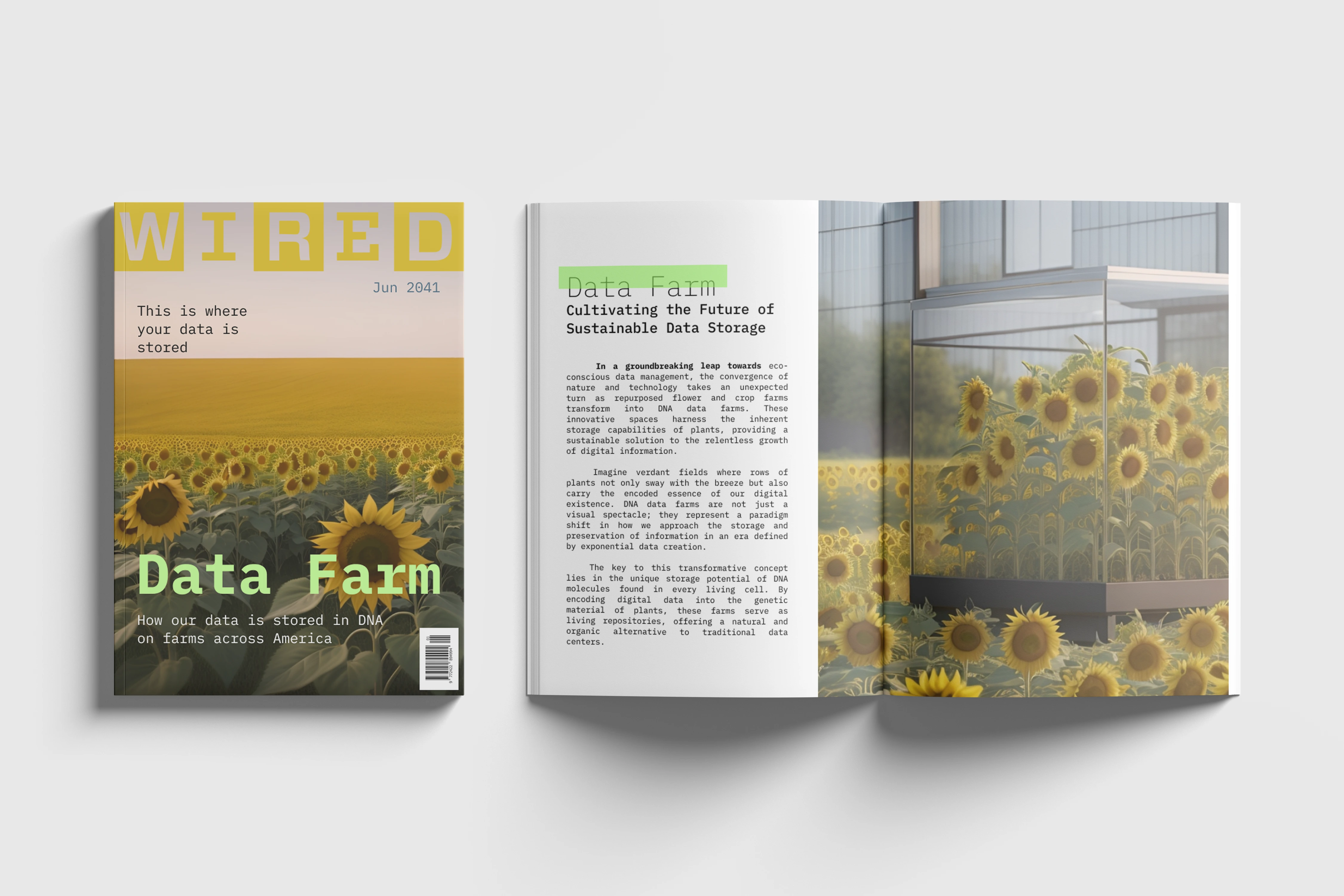
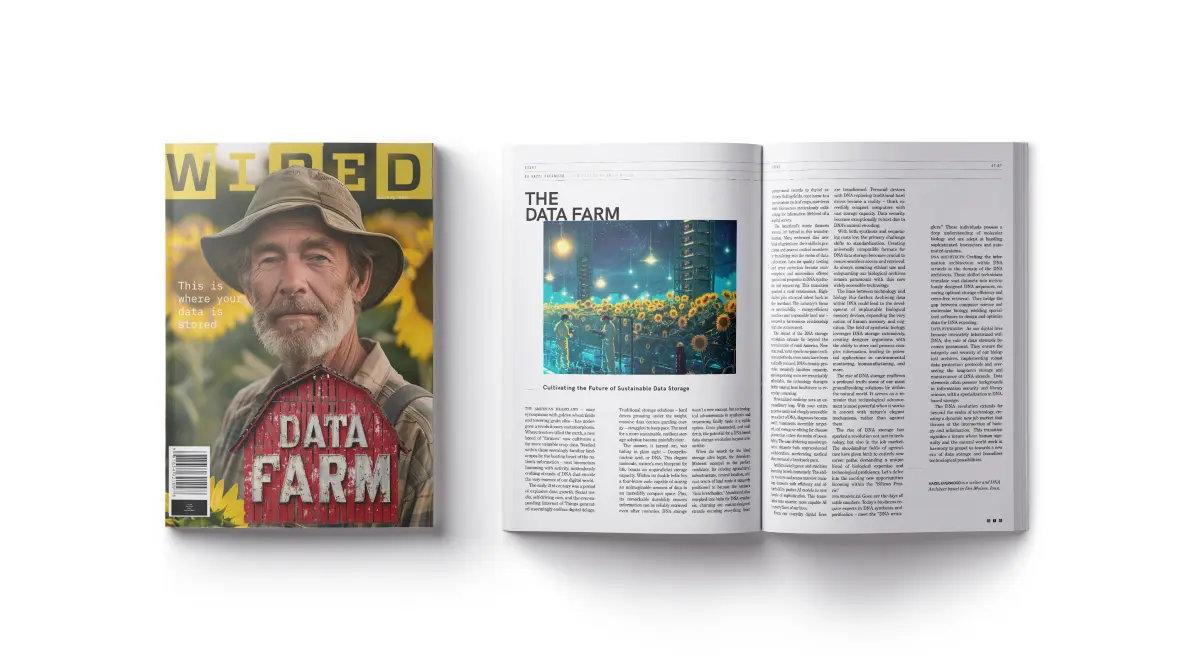
Magazine from the Future

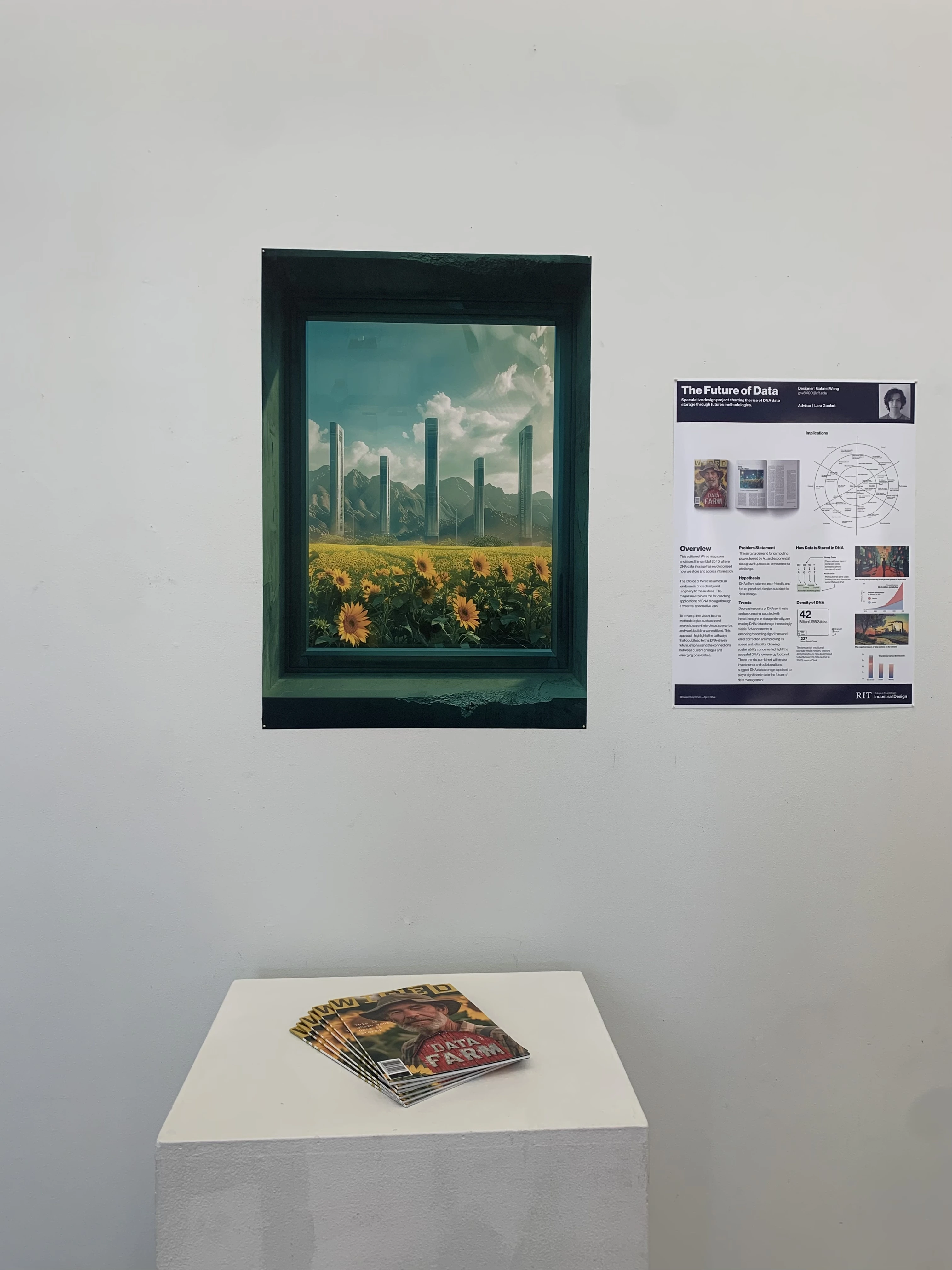
A futuristic edition of Wired magazine exploring the rise of DNA data storage.

Final Concept

I selected Wired Magazine from the Future as my final prototype because it enabled me to create a cohesive narrative around an envisioned future, integrating diverse concepts into a unified story. This format allowed me to authentically mimic Wired’s editorial style, enhancing believability and impact.

Final concept visualization
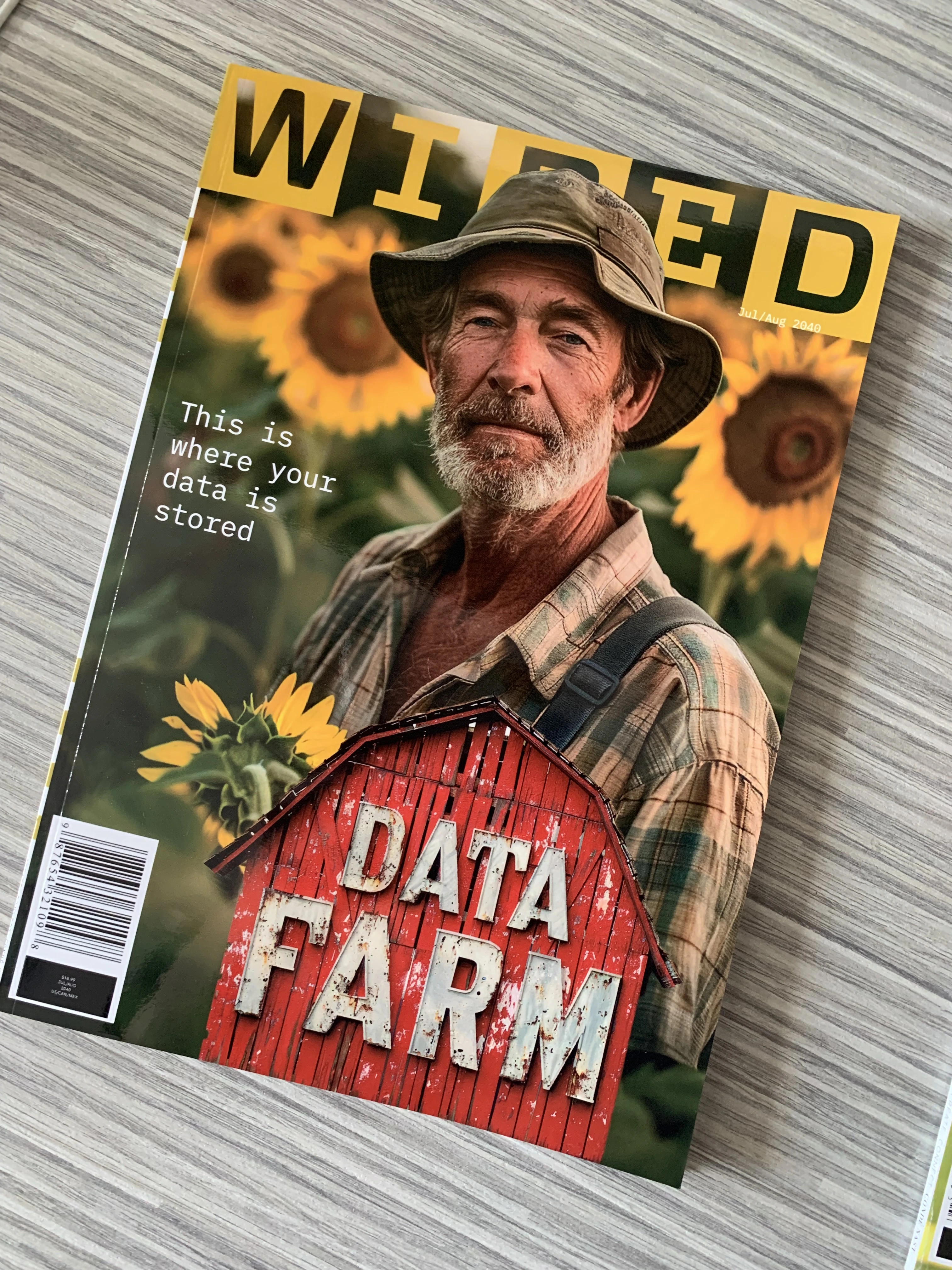
Physical print of the magazine

Physical print of the magazine

Presentation of the final concept

Capstone presentation

This project was the culmination of my senior capstone in Industrial Design. Developed through the Experimental Realism mentorship program, I collaborated with several futures practitioners to explore speculative design methodologies.